
An executive retreat changes the setting so a team can look at a question with greater perspective. A day may combine strategic sessions, working conversations and informal time; meals help set that pace. If the service requires someone to coordinate suppliers, solve practical issues or leave the table, it stops doing its job.
Start with the purpose and timetable
Before discussing the menu, it helps to understand the shape of the day: a morning session and lunch, a full day with dinner, or a gathering over several days. It also matters when the team needs to return to the meeting, whether there will be a presentation, and how much time you want to leave for conversation after the meal.
With that information, the format can be proportionate. A working lunch needs a different pace from a closing dinner; a leadership breakfast must be ready before the first conversation begins. For meetings at the office, see my guide to corporate lunches in Madrid.

Hospitality supports a meeting when it leaves room for conversation.
A setting for work and shared time
A residence, private room or company venue can work well if it is checked in advance. Access, basic equipment, the route between kitchen and table, and where the chef can work without interrupting the session all need to be considered. If the group moves between rooms, the service plan should move with it.
The setting should feel considered and comfortable. The table can be ready for conversation, with water to hand and gentle lighting, without turning lunch into a production that distracts from the purpose of the day.
A menu that suits the team’s energy
For a retreat, the menu needs to fit the time of day and length of the session. A short lunch may call for a more direct sequence; dinner can take a slower course. Seasonal cooking offers a sense of place without relying on a fixed menu.
Allergies, intolerances and preferences should be gathered before the proposal is agreed. Where possible, they can be considered within one culinary thread so everyone feels included and the team is not managing exceptions during the gathering. If several requirements need to be brought together, see how I plan one menu around different dietary needs.
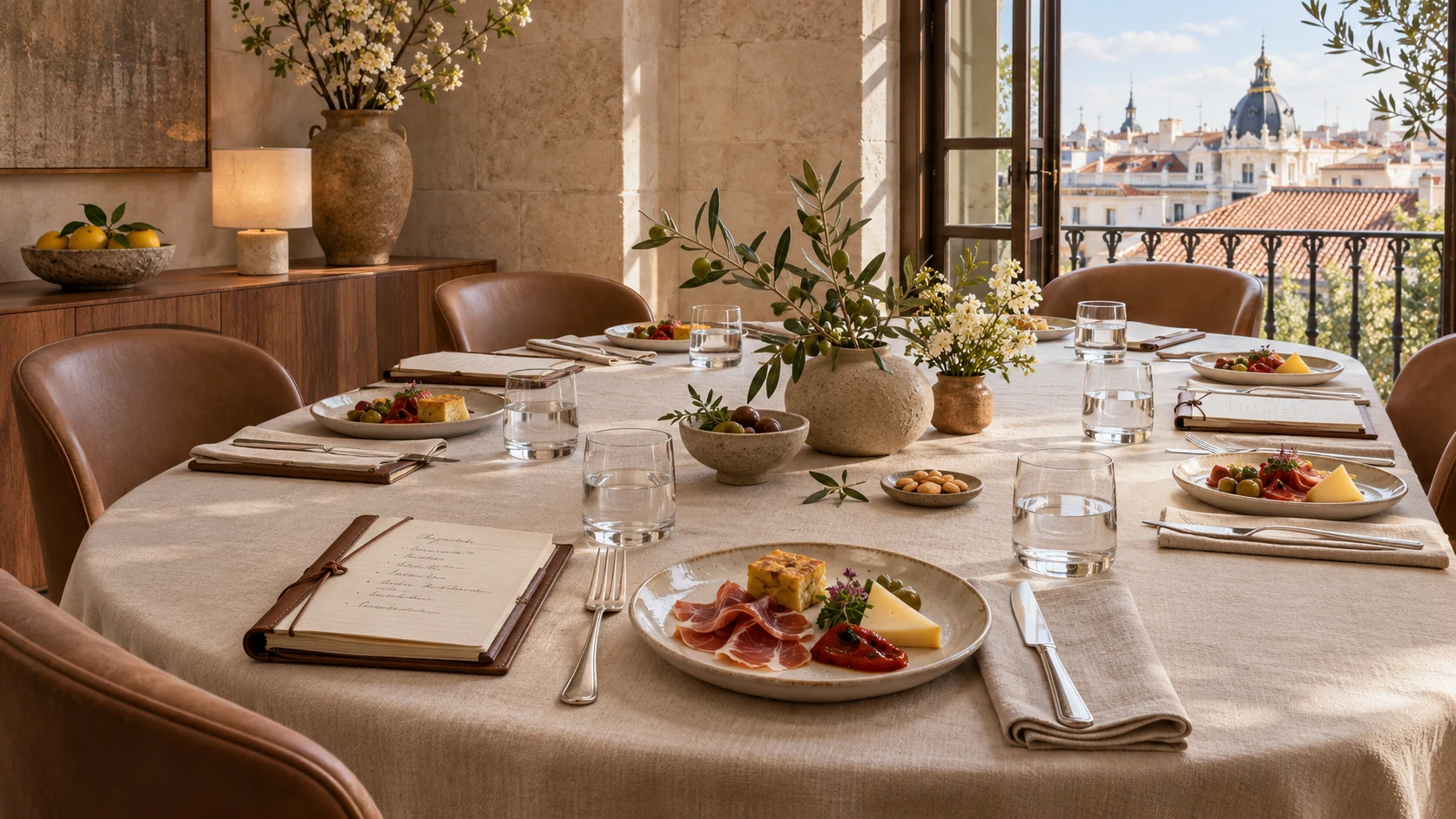
The space, timing and menu are planned as one experience.
What to settle before requesting a proposal
- Date, address and expected timings for each service.
- Approximate number of guests and the shape of the day.
- Time available for each meal and any room changes.
- Known dietary requirements and preferences.
- What the service includes: cooking, presentation, table service and clearing away.
With those details, feasibility can be considered, the scope defined and a clear proposal prepared. For the wider corporate approach, visit Strategic Hospitality for business.
Frequently asked questions
Can the service take place in a residence or hired venue?
Yes, provided the venue allows the service and the kitchen, access and set-up can be reviewed in advance.
Can you provide more than one meal during the retreat?
A full day or several services can be considered; the proposal depends on timings, guest numbers, venue and scope.
When should dietary requirements be shared?
As early as possible and before the menu is confirmed, so each need can be assessed and a workable proposal agreed.
What information is needed for a proposal?
Date, location, guest numbers, timings, the retreat format and any known dietary requirements.