01
House garum
Fish or seasonal vegetables, salt, and months of patience — the same method the Romans practised, now the liquid signature behind every menu.
It begins in a grandfather's kitchen, trained in France: the heat of the stove, the weight of silence, the habit of listening before acting. It was sharpened in kitchens where every second counted, and where every ferment, every trace of smoke, every grain of salt had its reason. Today, that same discipline is served in Madrid in a quieter form — measured, unshowy and exact.
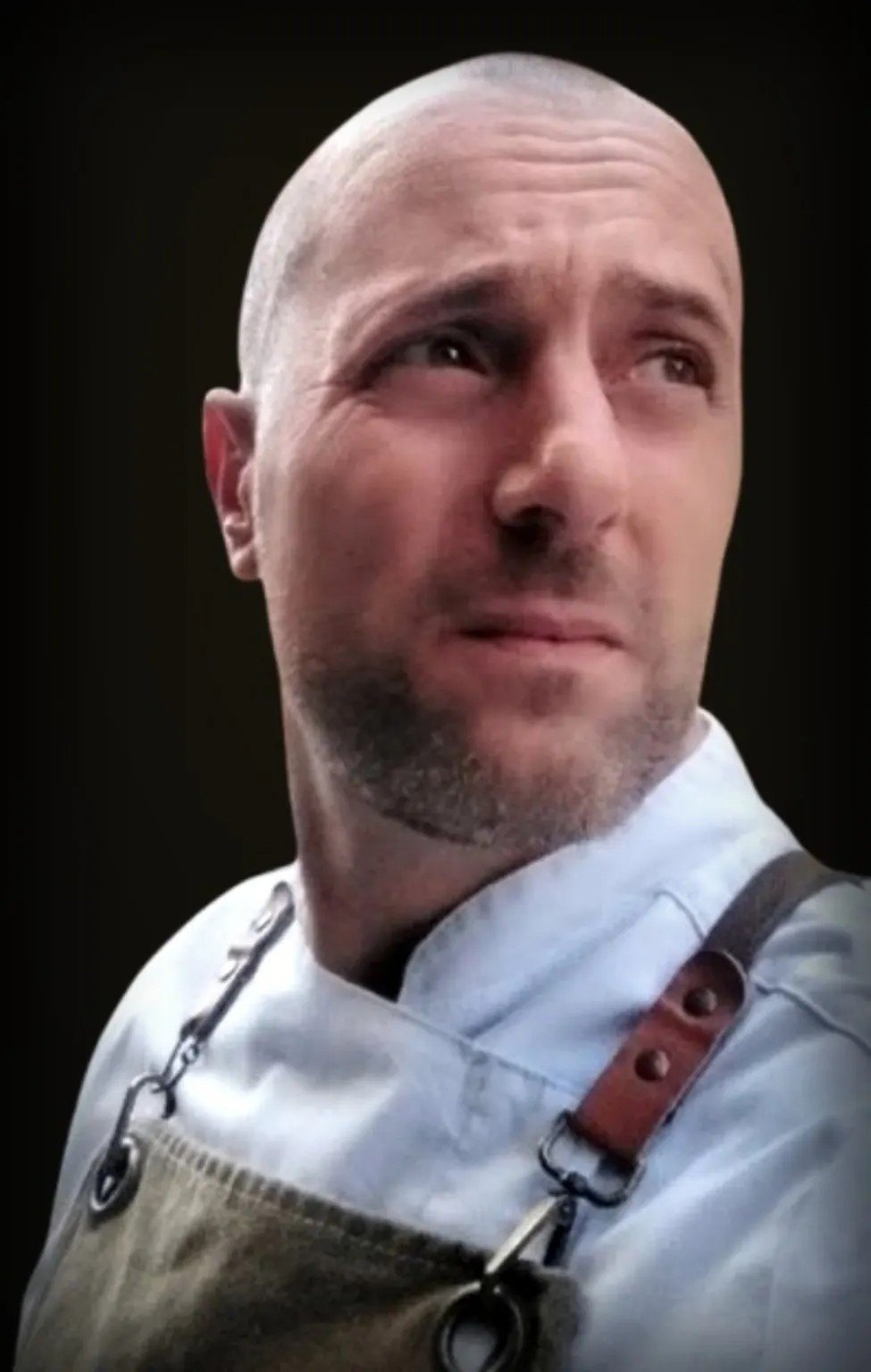
His grandfather was trained in the French school. There, one learned by watching, listening and repeating until the gesture no longer felt technical, only natural.
Jesús absorbed that discipline from childhood: the pressure of the product, the discipline of mise en place and the respect for timing. Later, demanding kitchens turned instinct into method.
Today, all of that is served more quietly: the plate does not compete with the occasion; it keeps it company. Creativity remains, but always in the service of the table.
Structure first. Product first.
Private service, calm and unforced. Attention where it belongs.
Each plate is shaped to suit the table, never the other way round.
His larder holds slow-aged garum, lactic ferments, kefir and kombucha cultured by hand, smoke used so lightly it barely registers, cured meats and fish, and pickles built from scratch: all of it hand-made, all of it his own, none of it off the shelf. None of these techniques is there to perform. They're there to give flavour more depth, more memory — and to give guests, if they ask, a real story behind what's on the plate.
Exacting cooking doesn't rest on technique alone. Behind every service that's remembered sits something less visible: costs controlled to the last cent, suppliers chosen and negotiated one by one, teams led under real pressure without it ever showing, figures that add up before the first course reaches the table.
Jesús learned that discipline alongside the kitchen itself: costings, margins, procurement, team leadership. It's the difference between a chef who cooks well and one who also understands how a hospitality business is run, start to finish.
That dual training underpins the Jesús Villalba Method: the same culinary rigour applied to how a company actually works. It's what Strategic Hospitality is built on — fixed pricing, no surprises, one point of contact.
Precise costings, margins that hold with no surprises later.
Direct sourcing, negotiated and checked one by one.
High-pressure services led so the effort never shows.
Every evening begins long before the first course — with a conversation to understand the occasion, who it's for, and the kind of memory it should leave behind.