01
Purpose before menu
The commission is built backwards from what the meeting needs to achieve — close, thank, retain, decide. Without that reading, everything else is simply good food served in an office.
Leadership lunches, client dinners and executive meetings, handled with the same rigour already applied to every other decision in the room. One point of contact, fixed pricing agreed in writing, and a level of discretion that never needs to be requested.
No leadership team questions the bill for a consultancy, the cost of a brand campaign or the investment in retaining a key executive. All of those lines of spend have the same purpose: moving a relationship forward.
The table is where many of those relationships are decided — and it is often the one part awarded on price alone.
What was close to being agreed, and the margin lost when the conversation cools at the wrong moment.
The credibility of the person who called the meeting. A board member remembers how they were received long after forgetting the agenda.
The unspoken message about how a company looks after its own people. Nobody says it aloud, but everyone registers it.
When something fails at the table, the food is not what fails: the meeting does. And when it works, it can be the reason a client signs, an executive stays or a relationship holds.
Every commission starts with the meeting rather than a menu: who is hosting, who is being received, what needs to happen and what should not be interrupted. The food follows from that reading.
A good meeting already has enough moving parts. The hospitality should remove some, not add more.
Size of the Spanish catering market in 2025, up 6% year on year.
Of that market is held by just five operators. Ten account for 60.5%.
The high-end segment: the fastest-moving part of the sector, driven by business activity.
Demand for a higher standard is growing while the market becomes more concentrated and standardised. The space between those two curves is where Strategic Hospitality operates.
Source: DBK Sector Observatory by INFORMA (Grupo Cesce), “Catering” study, 2025 closing data published in May 2026.
The failures in corporate hospitality tend to repeat across the same seven points. None happens at the table: they are decided weeks earlier, in how the commission is prepared.
If you recognised three or more of these seven, the next meeting is already carrying unnecessary risk.
The method can be explained. These three things only come from a structure like this.
Garums, lactic fermentations, smoking, curing and house pickles, with provenance verified. It is what separates a memorable table from one that is merely correct.
You speak to the person who will cook, from briefing to close. No sales team, no account intermediary, nobody translating the commission along the way.
What is learned at each service is not lost: who does not eat what, what worked, what is worth repeating. Over time, that accumulated memory becomes the hardest asset to replace.
The decision to commission rarely sits with one person. Each role is looking for something different.
The table stops being an unknown and becomes another tool within the strategy. The meeting is prepared around what it needs to achieve, not simply what will be served.
No chain of suppliers, no last-minute calls, no figures to reconcile afterwards. One point of contact, fixed pricing in writing and a response within 24 hours.
For boards, leadership teams or internal milestones that deserve more than a room booking. With a clear invoice and a concept that is easy to justify internally.
Four formats are available for business. Gabinete is the one designed specifically for it.
Board meetings, leadership committees and due diligence sessions, served at your premises without event-style production. Fixed pricing: the figure does not change if the meeting runs over.
Rates plus 10% VAT, subject to applicable law. Includes produce, staff and travel within Madrid city. Travel outside Madrid city is priced by mileage. Any kitchen equipment the venue does not have available (oven, bain-marie, induction, etc.) is assessed during the briefing and included in the fixed proposal. Larger groups or formats outside these reference bands are scoped during the briefing and quoted in writing.
Client dinners, institutional celebrations and multi-day programmes. A chef-led menu with house fermentation techniques, full front-of-house service and integrated event co-ordination.
The same technical standard in a more agile format: team lunches, client visits or meetings that do not require the full Vanguardia set-up.
Full experience design — menu, setting, pairing and team — for commissions where standardisation does not fit: institutional openings, state dinners or specific family-office requirements.
If hospitality is part of your calendar — monthly committees, partners’ lunches or regular visits — the Annual Contract reserves priority availability and groups several Gabinete services each month under a fixed monthly fee: from €1,800/month + 10% VAT, with two Gabinete services for up to six people included.
An initial conversation about the commission: purpose, guests, location, restrictions and the level of protocol required.
A menu and fixed budget, with the taxable base and VAT clearly itemised.
Written acceptance and a 50% deposit, which secures the date in the diary. The balance is settled according to the individual agreement.
The commission is delivered by the team and to the protocol agreed during the briefing.
A post-service check-in and, where relevant, discussion of recurring availability under the Annual Contract.
Every corporate commission is treated for what it is: an extension of the reputation of the person signing it.
Kitchens recognised with 3 Repsol Suns and a Michelin mention. The same standard applied to boards, clients and leadership teams today.
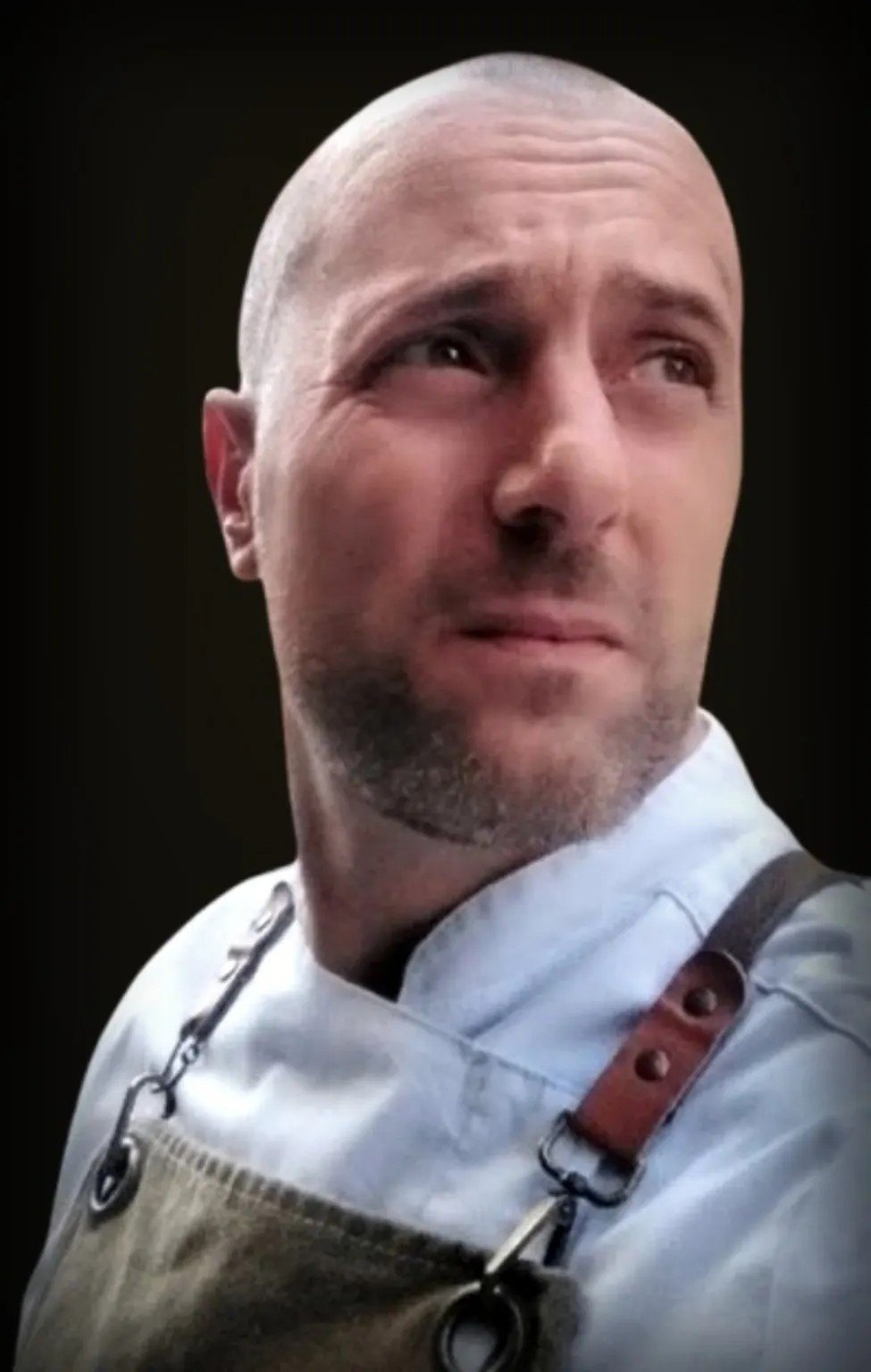
Every commission carries a name. There is no structure behind which to hide a mistake, and that shapes every service decision.
Madrid city is the usual base. Any travel beyond it is agreed and closed during the briefing, never afterwards.
The journal covers practical cases on dietary requirements, important client lunches, common corporate dining failures and Christmas company dinners in Madrid.
Tell me what the occasion is and when you need it. I will reply personally, with a proposal and fixed pricing agreed in writing.
I reply personally within 24 hours.
A 30–45 minute briefing to understand the context of the commission.
Menu and fixed pricing agreed in writing, within 48 hours.
The initial briefing carries no obligation — and it will tell you whether this method fits what you have in hand.