
From historical garum to a plant-based interpretation
Historical garum was a fish sauce. When I use the phrase “botanical garum” here, I mean it in a contemporary culinary sense: the aim is still to build an intensely savoury fermented condiment, but the raw material changes completely and the process may change with it. I work with mushrooms, roots, pulses or vegetables depending on the result I want.
The starting question is culinary rather than historical: what happens when controlled fermentation is applied to plant materials rich in proteins, sugars or aromatic compounds? Modern gastronomic research has experimented even with fermented pulse sauces and shown that fermentation can generate free amino acids associated with umami taste.
Botanical umami
The result can be a highly concentrated liquid condiment, with earthy, roasted or vegetal notes depending on the raw material. I call it “botanical umami” because that is the role I want it to play on the plate: depth and persistence in a very small amount.
It shares with my fish garums the need to formulate, ferment, wait and taste, but I do not present it as the same technique. Each raw material calls for different decisions and leaves its own signature in the finished condiment.
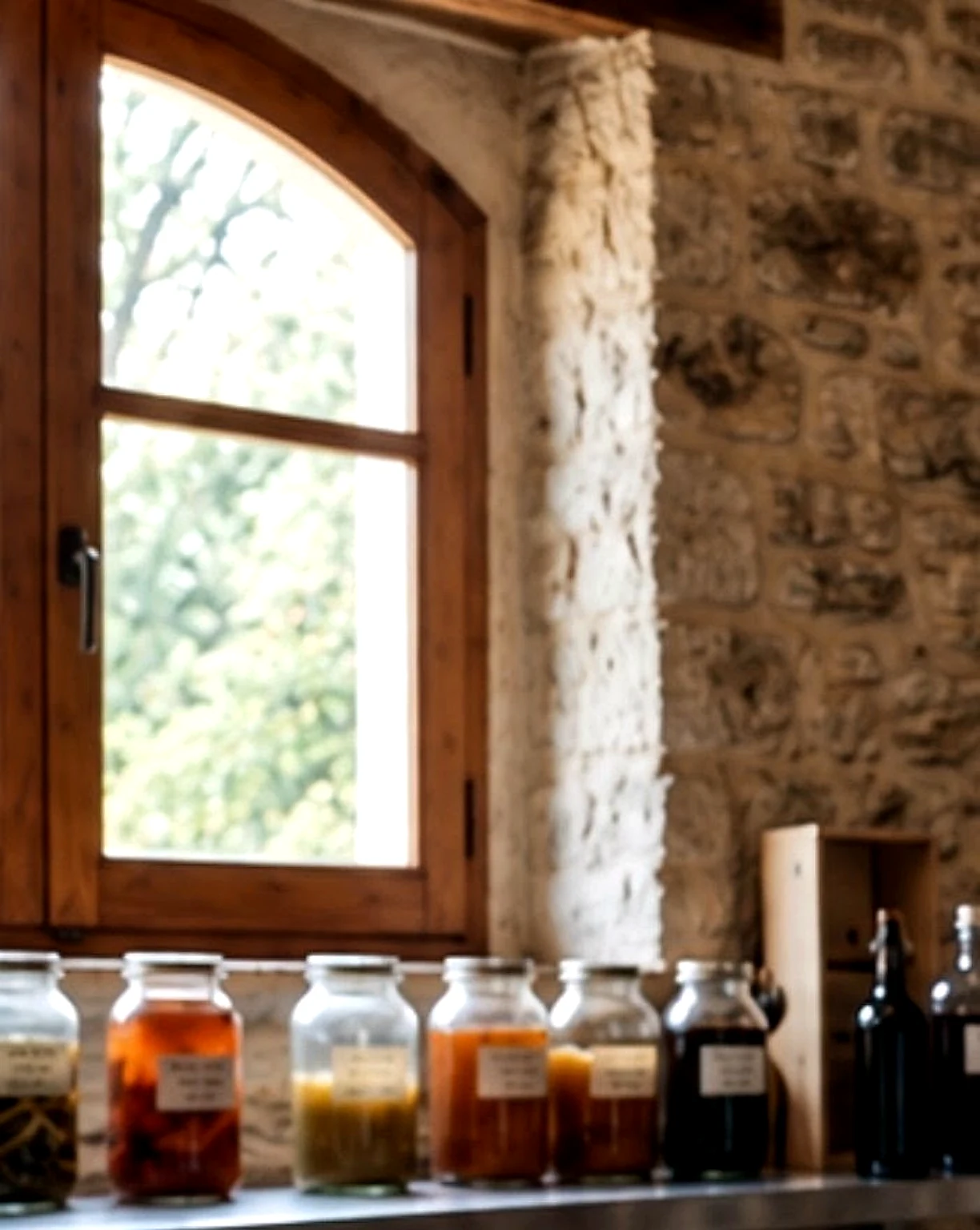
The full spectrum: from the lightest fermentations to the most concentrated and darkest umamis.
Patience as a technique
If there's one ingredient that never appears on any list but holds the whole thing together, it's time. Turning a root or a mushroom into a complex, refined condiment doesn't call for anything clever — it calls for waiting long enough, and resisting the urge to rush it.
Simple things turn complex once you give them time to spare.
The patience is common to both. The exact technique is not: a plant ferment is designed around its own raw material rather than copied literally from a fish-sauce recipe.
A thread that runs through the table
At the table, these drops of vegetal essence rarely announce themselves — they turn up as a quiet thread running through the menu, a note that comes and goes without the guest quite being able to name it. It's a sensory depth that ties garum's history to a contemporary cooking that draws on the land as much as the sea.
For me, this third chapter closes an editorial circle: starting from historical garum, asking what made that kind of condiment valuable, and carrying the search for depth into a technique of my own. The connection is culinary intent, not a claim that a modern plant ferment is a Roman recipe.
